Styling
5 Elegant Ways to Drape a Silk Saree
NYSA SILK Editorial · 5 min read
The beauty of a silk saree lies not only in its weave but in how it is draped. A single saree can tell entirely different stories depending on the draping style chosen — from the structured formality of a Nivi drape to the regal sweep of a Maharashtrian style. At NYSA SILK, we believe every woman should feel confident experimenting with different draping techniques, and here are five elegant styles to inspire your next occasion.
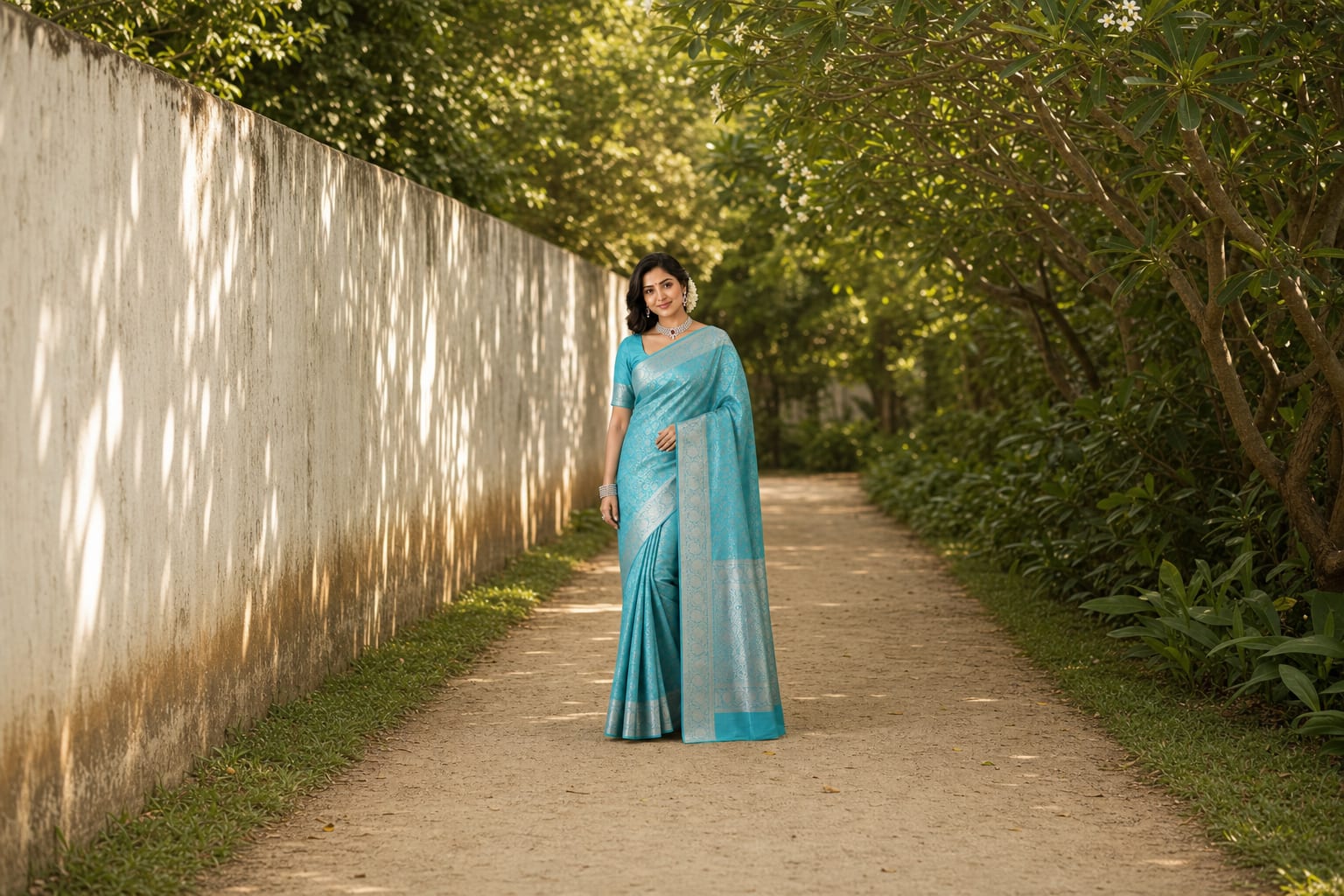
The Nivi drape is the most widely recognised and versatile style. Originating from Andhra Pradesh, the Nivi involves tucking the saree at the waist, creating neat pleats at the front, and draping the pallu over the left shoulder. For silk sarees, particularly Kanjivarams with their structured fabric, the Nivi drape creates a clean, sculpted silhouette. The key to a beautiful Nivi with a heavy silk is to keep your pleats crisp and slightly wider than you would with a lighter fabric — typically five to seven pleats, each about four to five inches wide. Pin the pallu at the shoulder to keep the heavy zari border from slipping, and let it fall naturally to mid-thigh for the most flattering proportions.
The Gujarati or Seedha Pallu style reverses the pallu direction, draping it from back to front over the right shoulder instead of the left. This brings the pallu — often the most ornate part of a Kanjivaram — to the front of the body, making it the visual focal point. This style works beautifully for sarees with particularly elaborate pallu designs and is the traditional choice for many wedding ceremonies in Western and Northern India. For silk sarees, this drape creates a slightly more relaxed silhouette than the Nivi, with the fabric flowing more freely across the torso.
The Maharashtrian Nauvari or nine-yard style is a bold, statement-making drape that creates a dhoti-like look between the legs. While traditionally done with a longer saree, many women adapt a version of this style with standard six-yard silks by pulling the back portion of the fabric between the legs and tucking it at the back waist. This creates a powerful, active silhouette that was historically worn by Maratha queens and warriors. On a rich Kanjivaram, the Nauvari drape looks nothing short of regal and is increasingly popular for sangeet and reception events where brides want to dance freely.
The modern one-minute or pre-stitched drape has become a game-changer for women who love silk but feel intimidated by traditional draping. By adding pleats that are pre-stitched and a pallu with a hook or pin mechanism, the saree can be worn as easily as stepping into a skirt. NYSA SILK offers pre-stitching services for any saree in our collection — our tailoring team ensures the stitches are discreet and reversible, so you can always return to a traditional drape. The fifth variation is the lehenga-style drape, where the pleats are fanned out and pinned at the back rather than tucked at the front, creating a half-skirt effect that pairs beautifully with a fitted blouse and statement belt.