Education
Kanjivaram vs Dharmavaram: Which Silk for Your Occasion?
NYSA SILK Editorial · 6 min read
India's temple towns of Tamil Nadu and Andhra Pradesh sit at the heart of two of South India's finest silk-weaving traditions: Kanjivaram from the temple town of Kanchipuram, and Dharmavaram from the trading town of the same name. Both are heavy, ceremonial mulberry-silk sarees woven with tested gold zari, both are prized for generations, and both make extraordinary occasion wear. Yet they differ in technique and detail — and understanding those differences helps you choose the right silk for every moment.
Kanjivaram silk is distinguished by its korvai construction. Woven on a traditional pit loom, a Kanjivaram saree uses a three-shuttle technique where the body and border are woven separately and then interlocked at the seam — a method that produces the sharp, contrasting borders Kanjivarams are famous for. The silk itself is heavier and more robust, typically using mulberry silk with a higher thread count that gives the fabric its characteristic stiffness and sheen. The zari work tends to be geometric and architectural, featuring temple towers, checks (kattam), and mythological figures.
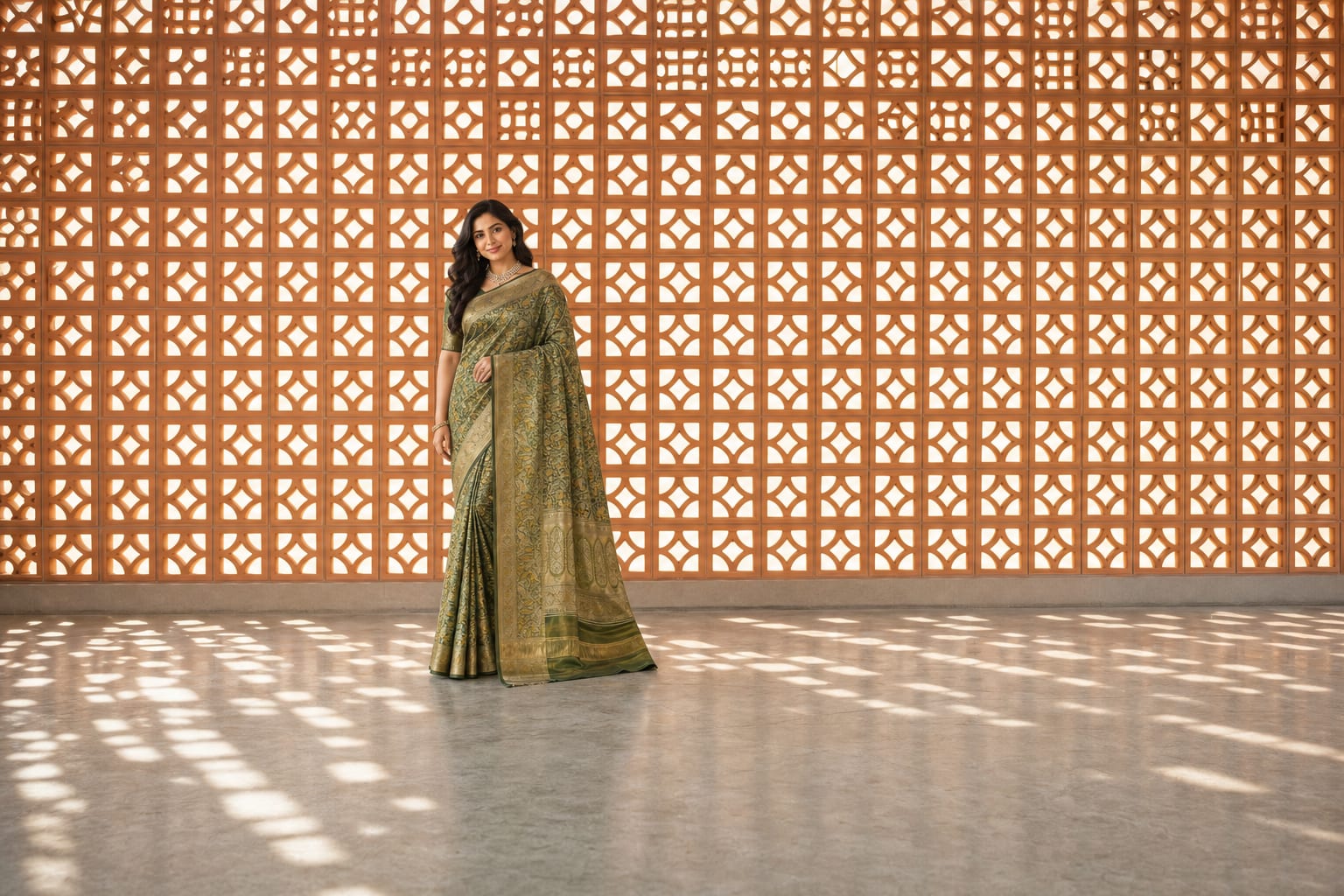
Dharmavaram silk, by contrast, is known for its broad, solid-colour body and wide, dramatic contrast borders. Rather than the interlocked korvai border, Dharmavaram weavers favour large, richly worked brocade pallus that carry the bulk of the zari — an all-over grandeur concentrated at the shoulder rather than spread along the border. The drape is every bit as ceremonial as a Kanjivaram, with the same generous mulberry-silk weight, but the visual emphasis sits differently on the saree.
For bridal wear and temple ceremony, both traditions carry the same weight and gravity — the choice often comes down to family custom and the specific motifs each region is known for. A Kanjivaram's structured korvai border holds elaborate bridal pleating with precision, while a Dharmavaram's dramatic pallu makes its own statement when draped over the shoulder for the ceremony walk.
For festive occasions, a Kanjivaram in jewel tones — emerald, ruby, sapphire — makes a commanding statement at formal pujas, temple visits, and family celebrations. A Dharmavaram in the same rich palette, with its broader body colour and bolder pallu, reads just as grand under festival lighting. At NYSA SILK, we curate both traditions because our founder's father has spent 55 years buying from these two loom corridors, and we believe the difference between them is worth knowing before you choose.